
7 Signs Your Retaining Wall Needs to Be Rebuilt
· By Obadias Garcia
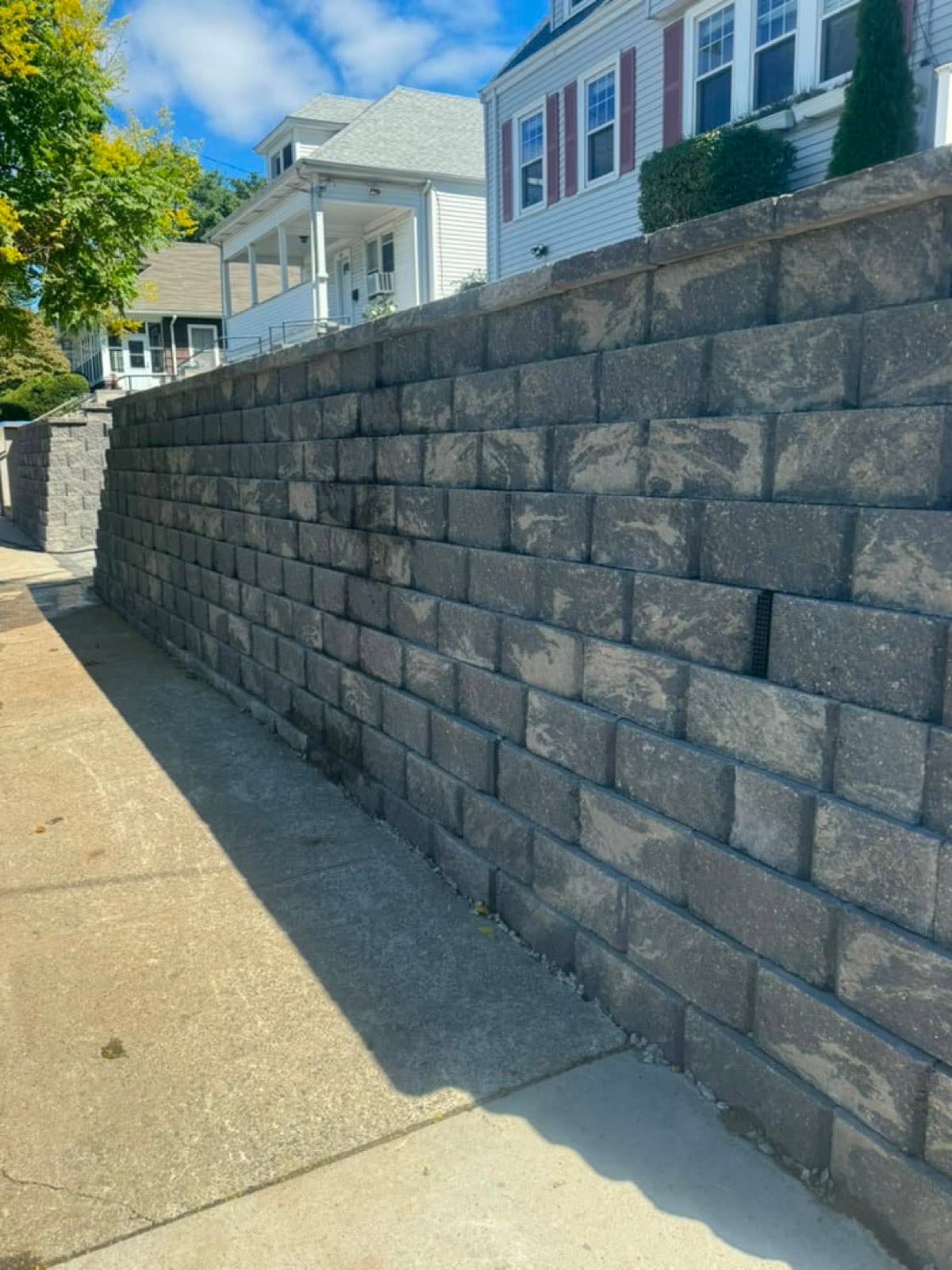
A retaining wall does one job that most homeowners never think about until it goes wrong: it holds back thousands of pounds of soil and water so the yard above it stays put. When it works, you barely notice it. When it starts to fail, the signs show up slowly, then all at once, and by then a small fix has usually turned into a full rebuild.
Here on the South Shore, our walls take a beating. Wet New England springs saturate the soil, summer storms dump water fast, and winter freeze-thaw cycles push and heave the ground behind every wall in Massachusetts. Below are seven signs your retaining wall needs to be rebuilt, what actually causes them, and how to tell when it is safe to wait versus when you should act now.
1. The wall is leaning or tilting forward
A retaining wall should stand plumb or lean very slightly back into the hill (that intentional backward tilt is called batter). If the top is tipping out toward you, the wall is losing the fight against the soil behind it. Stand at one end and sight down the face, or hold a level against it. Any forward lean that was not there before is a red flag.
The root cause is almost always pressure and drainage, not the blocks themselves. Water builds up behind the wall and pushes with enormous force (this is called hydrostatic pressure), and freeze-thaw cycles heave the soil outward a little more each winter. Once a wall tilts, the load shifts and it keeps going. This is one of the clearest signs a rebuild is coming, because you cannot push a leaning wall back into place and expect it to hold.
2. Sections are bulging or bowing out
Leaning affects the whole wall. Bulging is when one area of the face swells outward while the rest stays flat, giving the wall a belly. It usually means the soil or backfill behind that spot is trapping water or has shifted, concentrating pressure on one section.
A bulge is a sign the wall is deforming under load. The materials are being forced out of line, and the reinforcement or backfill behind them is no longer doing its job. Bulging rarely improves on its own, and it often points to a problem with how the wall was built or drained in the first place, which is why patching the face alone almost never solves it.
3. Cracks running through the wall
Not every crack is an emergency, but the pattern matters. Long horizontal cracks, stair-step cracks that climb through the joints, or cracks that are wider at the top than the bottom all suggest the wall is being pushed and is starting to break apart. Cracks that keep growing month to month are the ones to worry about.
In a poured or block wall, structural cracking means the pressure behind it has exceeded what the wall can carry. Water gets into those cracks, freezes in winter, expands, and pries them wider every year. A quick patch hides the line but does nothing about the force causing it, so the crack comes back.
4. Blocks are separating or shifting apart
On a segmental block wall, the units should sit tight and even. When you see gaps opening between blocks, courses that no longer line up, or stones that have slid out of position, the wall is coming apart at the joints. You may also notice the caps on top rocking or sitting loose.
Separation tells you the wall is moving as a system. The blocks depend on staying locked together and tied back into the hillside. Once they drift apart, water and soil work into the gaps and accelerate the failure. Reseating a few loose blocks on a wall that is already separating is a temporary fix at best.
5. Water pooling behind or seeping through the wall
Look at the base of the wall after a heavy rain. A healthy wall drains: you should see gravel and weep points letting water escape, and the ground behind it should not stay soggy for days. Warning signs are water pooling on the uphill side, constant damp streaks or white mineral stains on the face, or soil that stays saturated long after the storm passes.
Drainage is the number one reason retaining walls fail in Massachusetts. When the gravel backfill, drain pipe, or weep holes get clogged or were never installed correctly, water has nowhere to go. It builds up, adds weight, and pushes on the wall around the clock. That is the hidden force behind most leaning, bulging, and cracking, and it is why a good rebuild starts with fixing the drainage behind the wall, not just the stone in front of it.
6. Soil erosion or undermining at the base
Check where the wall meets the ground. If you see soil washing out from the bottom, a gap or void opening under the first course, or the footing becoming exposed, the foundation is being undermined. A retaining wall is only as strong as what it sits on.
Erosion at the base usually comes from water running along the front of the wall or escaping under it and carrying soil away. Once the base is compromised, the whole wall can settle or rotate no matter how solid the upper courses look. This is a serious sign, because you cannot fix a failing base by working on the top of the wall.
7. Settling, sinking, or a loose, uneven top
Finally, look at the top of the wall and the ground above it. A dip in the wall line, caps that have sunk or heaved, cracks in a patio or walkway sitting behind the wall, or soil pulling away from the top surface all point to settling. If the cap stones lift off easily or wobble, the wall has lost its integrity up top.
Settling means the ground under and behind the wall is moving, often from poor compaction when it was built or from ongoing erosion and freeze-thaw. When the top is loose and the wall is settling, the structure is telling you it can no longer hold its shape, and cosmetic repairs will not bring it back.
Why patching a failing wall rarely works
Most retaining wall problems trace back to two things you cannot see from the front: the base it sits on and the drainage behind it. When a wall is truly failing, the blocks are just the messenger. Resetting stones, filling cracks, or facing over a bulge treats the symptom while the water pressure and undermining keep working. Within a season or two, the same wall is back where it was, and you have paid twice.
A proper rebuild fixes the causes: a compacted stone base, the right gravel backfill, a drain pipe and weep points that actually move water away, and reinforcement tied into the hillside. Done once, done right, a rebuilt wall in New England should stand for decades. That is the difference between spending money and wasting it.
When it is safe to wait, and when to act
Not every hairline crack means you need a new wall tomorrow. Short, stable, non-structural walls (under about three feet, no lean, draining fine) can often be monitored. Mark a crack with a pencil and check it over a few months. If nothing moves, you likely have time to plan.
Act sooner if the wall is over three or four feet, is leaning or bulging, sits below a driveway, patio, pool, or foundation, or shows two or more of the signs above at once. Those walls carry more load and more risk if they let go. We serve homeowners across the South Shore, including Canton and Sharon, and the honest answer of repair versus rebuild depends on your specific wall. Rebuild costs vary widely with height, length, materials, and site access, so any number online is only a rough guide. The best way to know is a free on-site estimate where we can see the base, the drainage, and how far the problem has actually gone.
Frequently asked questions
- Can a leaning retaining wall be repaired, or does it need a full rebuild?
- A wall that is already leaning has usually failed at the base or the drainage behind it, so pushing it back or patching the face rarely holds. In most cases a leaning wall needs to be rebuilt with a proper base, backfill, and drainage. A short, minor lean on a low wall can sometimes be stabilized, which is why an on-site look matters before deciding.
- How long should a retaining wall last in Massachusetts?
- A wall built correctly, with a compacted base, quality materials, and real drainage behind it, can last several decades in the New England climate. Walls that fail early almost always skipped the drainage or the base. Freeze-thaw and heavy spring rain here are hard on walls, so how it was built matters far more than the brand of block.
- How much does it cost to rebuild a retaining wall on the South Shore?
- Cost depends heavily on the height, length, materials, drainage work, and how easy the site is to access, so figures vary widely from one project to the next. Rather than quote a number that may not fit your yard, we offer a free on-site estimate for homeowners in Canton, Sharon, and the surrounding South Shore area so you get a real price for your wall.
Related services
Serving
Ready for an exact price?
Get a free, no-pressure on-site estimate. Real numbers for your yard, not a phone guess.