
Repair or Replace: How to Know If Your Patio or Walkway Needs Rebuilding
· By Obadias Garcia
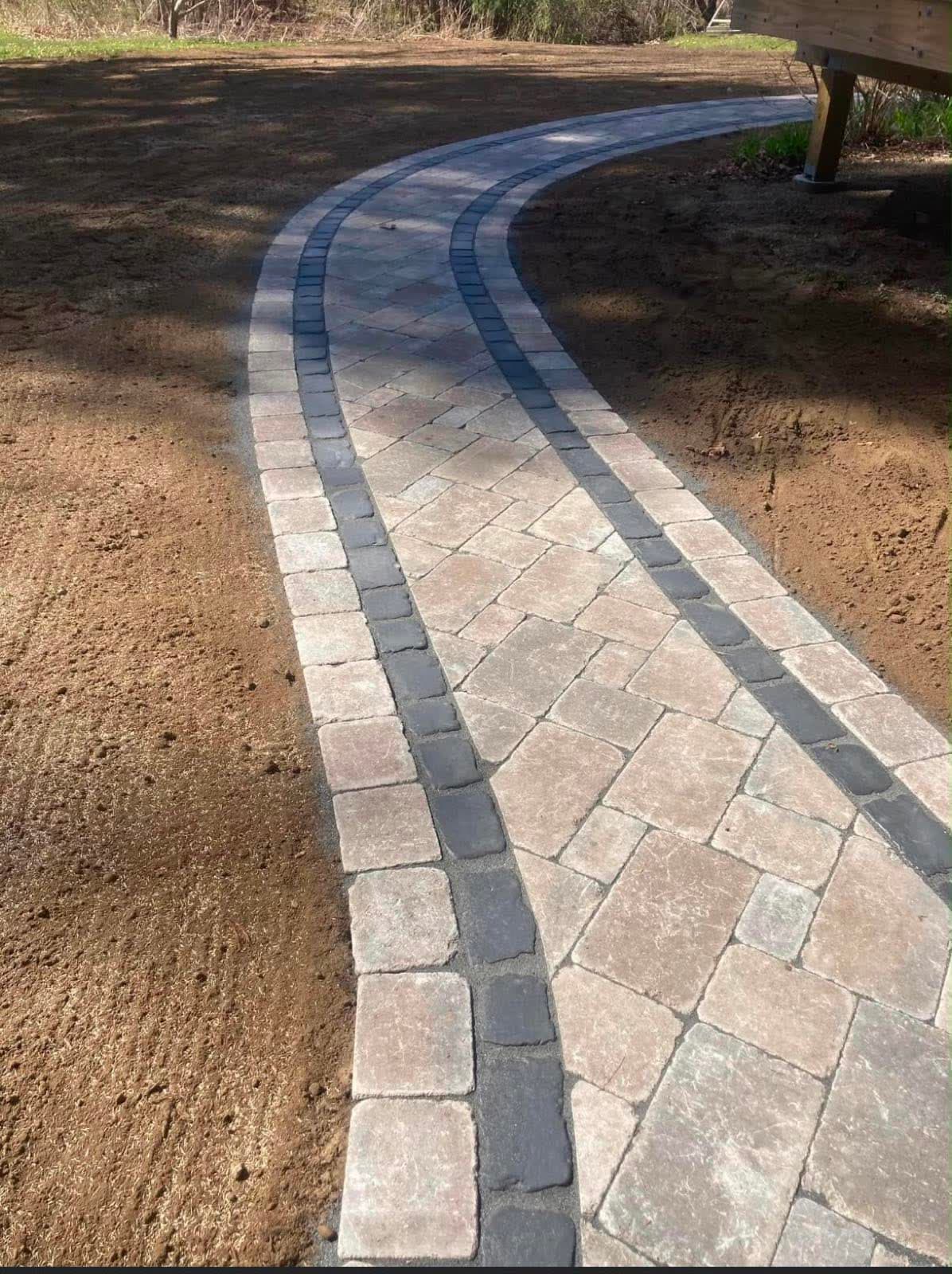
Your patio looked great the day it went in. A few New England winters later, one corner dips when you step on it, weeds are pushing through the joints, and a couple of pavers rock under your feet. The natural question is whether you should patch the trouble spots or tear the whole thing out and start over. The honest answer is that it depends on one thing: the base underneath.
This guide walks South Shore homeowners through how to read the signs. Most of the time you can tell, from the yard, whether you are looking at a quick fix or a real rebuild. We serve homeowners across Stoughton, Brockton, and the surrounding South Shore, and we see the same handful of patterns over and over. Here is how to spot which one you have.
When a Repair Is Enough
The good news about a paver patio or walkway is that it comes apart. Pavers are set on a compacted base and bedding layer, so a single unit or a small section can be lifted, reset, and locked back in without touching the rest of the surface. If the problem is small and isolated, a repair usually holds for years.
Repair territory looks like this: one or two pavers that have settled a little, a short run of joint that has lost its sand, weeds or ants in the joints, or a spot where the surface dipped after a heavy rain but the rest of the patio sits flat and solid. In those cases the base is still doing its job. The fix is to lift the affected pavers, top up and recompact the bedding, reset them level, and refill the joints with fresh polymeric sand. A localized relevel like this is far cheaper than a rebuild and, when the base is sound, it lasts.
When You Are Really Looking at a Rebuild
A rebuild is the answer when the problem is not the pavers but what is under them. If the base was never compacted properly, was built too thin, or has poor drainage, the surface will keep moving no matter how many times you reset the top. Fixing the same spot every spring is a sign the base has given up, not the pavers.
Signs that point to a rebuild: widespread heaving where large areas lift and shift each winter, sections that sink again within a season or two of being reset, water that pools in the same place after every rain, and a surface that has gone wavy or uneven across most of its area. When several pavers move together as a group, or when the whole patio has developed a slope that sends water toward the house instead of away, the base and the drainage need to be redone. That means excavating, laying and compacting a proper gravel base with the right pitch, and resetting the pavers on fresh bedding. It is more work, but it is the only fix that actually holds.
Pavers Versus Poured Concrete
The material you have changes the math. Interlocking pavers are built to be serviced. Because each unit is separate, a good installer can swap a cracked paver, reset a settled section, or refresh the joints without disturbing the surrounding surface. That flexibility is a big part of why pavers hold up so well through freeze-thaw cycles in Massachusetts and across New England.
Poured concrete is a different story. A concrete slab is one solid piece, so once it cracks, heaves, or spalls, you cannot lift out a small area and reset it. Surface patches on concrete tend to show and rarely bond well long term. Minor hairline cracks can sometimes be sealed, but structural cracking, a slab that has lifted at a joint, or flaking from years of road salt usually means replacement. Many South Shore homeowners use that moment to switch from a cracked concrete walkway to pavers, precisely so the next repair is a simple reset instead of a full tear-out.
A Simple Rule of Thumb
Here is the quick decision ruler we give homeowners. Ask three questions. First, is the trouble limited to a small area, roughly a fifth of the surface or less? Second, is the rest of the patio flat, stable, and draining away from the house? Third, is this the first time you are fixing this spot? If you answered yes to all three, you are almost certainly in repair territory, and a spot reset with fresh sand will do it.
If large areas move, if water pools in the same place every rain, if you have reset the same spot before and it came back, or if you are dealing with a cracked concrete slab, plan on a rebuild. Costs vary widely with size, access, and site conditions, so treat any number you see online as a rough range only. The reliable way to know what your specific patio or walkway needs is to have someone read the base in person. We offer free on-site estimates across Stoughton, Brockton, and the South Shore, and we will tell you honestly when a repair is the smarter call.
Frequently asked questions
- Can a sunken paver patio be fixed without replacing the whole thing?
- Often, yes. If only a small section has settled and the rest of the patio is flat and stable, an installer can lift those pavers, recompact and level the bedding, reset them, and refill the joints. The full patio only needs to come out when the base or drainage under a large area has failed.
- How long should a paver patio last in Massachusetts?
- A paver patio built on a properly compacted base with good drainage can last for decades through New England freeze-thaw cycles, with occasional joint-sand refreshes and minor resets along the way. Short lifespans almost always trace back to a base that was rushed or built too thin, not to the pavers themselves.
- Should I repair or replace a cracked concrete walkway?
- Because concrete is a single slab, structural cracks, heaving, or flaking usually call for replacement rather than a patch, which tends to show and rarely bonds well. Hairline surface cracks can sometimes be sealed. Many homeowners use replacement as the moment to switch to pavers so future repairs are simple resets.
Related services
Serving
Ready for an exact price?
Get a free, no-pressure on-site estimate. Real numbers for your yard, not a phone guess.