
Pavers vs Concrete Patio: Which Is Right for a Massachusetts Backyard?
· By Obadias Garcia
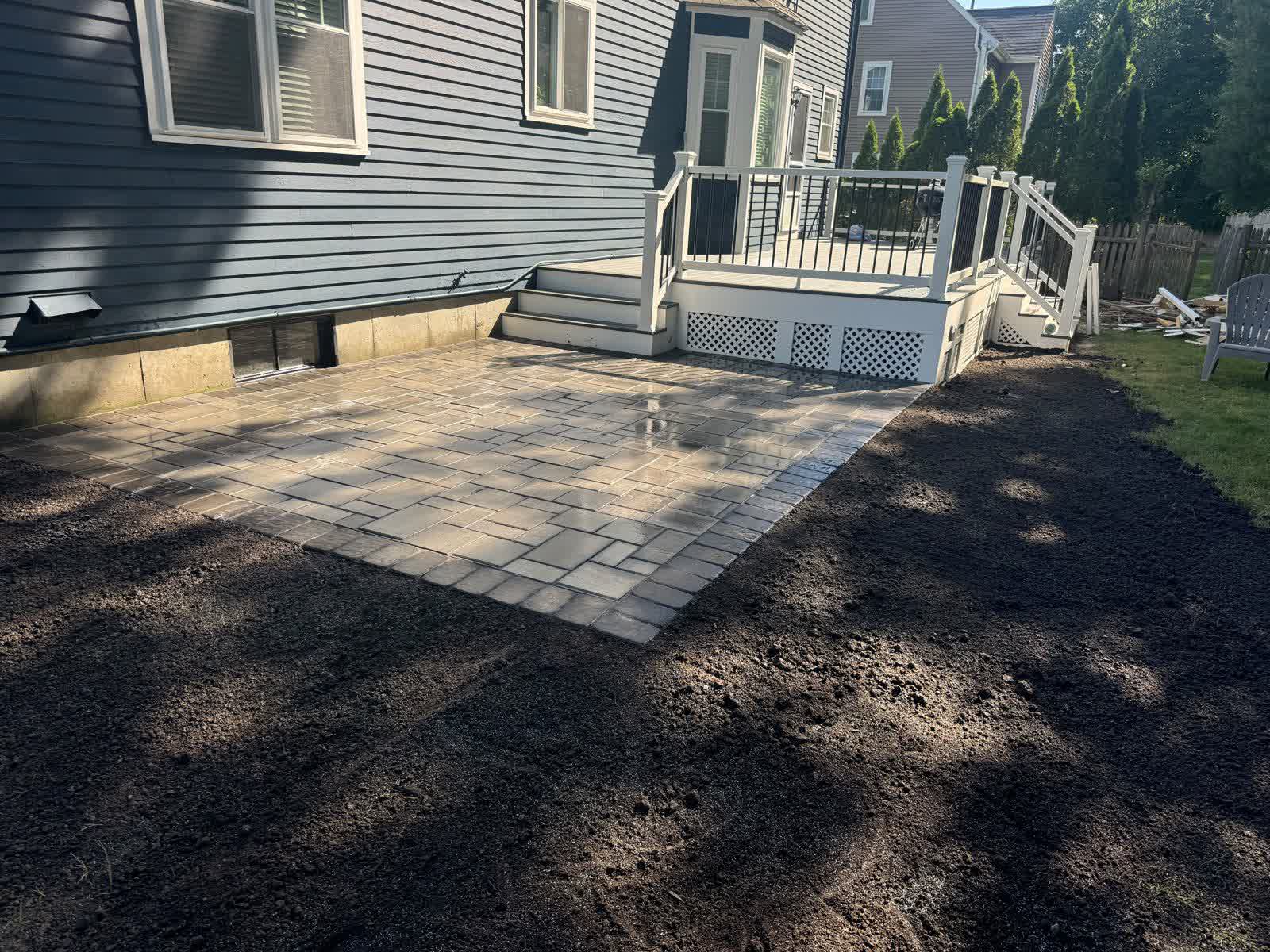
If you are planning a new backyard patio in Massachusetts, the first real decision is usually the material: interlocking pavers or a poured concrete slab. Both can look great and both are common across the South Shore, from Stoughton to Brockton and Randolph. The right answer depends on your budget, how the surface will hold up through New England winters, and how much upkeep you are willing to do.
This guide breaks down the honest trade-offs of each option, with special attention to the freeze-thaw cycles that make our climate hard on outdoor surfaces. The goal is to help you pick what fits your yard and your plans, not to push one product. Prices below are general market ranges, so treat them as ballpark figures and get a free on-site estimate for numbers that match your project.
Upfront cost: where concrete wins
On day one, a poured concrete patio is almost always the cheaper option. In the Massachusetts market, a basic broom-finished concrete slab typically runs on the lower end per square foot, while a paver patio usually costs more because of the material itself and the labor to set each unit by hand. Decorative concrete (stamped or colored) narrows that gap and can land close to entry-level pavers.
That said, the cheapest number is not always the best value. A properly built paver patio can outlast a slab and avoid a full replacement down the road, which changes the math over ten or twenty years. When you compare quotes, ask what base prep is included, because a thin or poorly compacted base is the most common reason a patio fails early in New England, no matter the surface on top.
Freeze-thaw and cracking: the New England factor
Massachusetts sees dozens of freeze-thaw cycles every winter. Water seeps into small gaps, freezes, expands, and pushes on whatever is around it. This is the single biggest reason patios move, heave, or crack here on the South Shore.
A poured slab is one large rigid piece, so when the ground shifts it tends to crack, and once a crack starts it usually spreads. Control joints help steer where cracks form, but they do not prevent them entirely. Pavers handle the same movement differently: because the surface is made of many small units set over a flexible base, it can flex slightly and settle without cracking. If a paver does shift or a section heaves, the interlocking design absorbs a lot of that stress rather than fracturing across the whole patio.
Repairs, maintenance, and resale
Repairs are where pavers really stand out. If one unit stains, chips, or settles, you (or your contractor) can lift that single paver and reset or swap it, and the fix blends in. Fixing a cracked slab is harder: patching is visible, and a bad crack often means resurfacing or replacing a large area. On maintenance, pavers ask for occasional joint sand top-ups and an optional seal, while concrete wants crack monitoring and periodic sealing to resist salt and moisture.
On resale, a well-built paver patio tends to read as a premium, low-maintenance feature to buyers around Brockton and Randolph, and it photographs well in a listing. Concrete is a solid, expected feature that rarely hurts a sale but rarely wows either. If curb appeal and long-term value matter to you, that difference is worth weighing against the higher upfront price.
So which should you choose?
Lean toward concrete if your budget is tight right now, you want a clean simple surface, and you are comfortable accepting some hairline cracking over time. Stamped concrete is a good middle path when you want a decorative look closer to pavers for less money.
Lean toward pavers if you plan to stay in the home for years, you want the most durable option for our freeze-thaw winters, and you like that individual repairs are easy and nearly invisible. Whichever way you lean, the base and drainage matter more than the surface material. A free on-site visit lets us look at your grade, soil, and layout and give you an honest recommendation for your specific Massachusetts yard.
Frequently asked questions
- Do pavers or concrete last longer in Massachusetts winters?
- Pavers generally hold up better through New England freeze-thaw cycles because the many small units flex over a compacted base instead of cracking like a single rigid slab. A well-built and properly drained concrete patio can still last a long time, but it is more prone to visible cracking over the years.
- Is a paver patio worth the extra cost over concrete?
- It often is if you plan to stay in the home for years. Pavers cost more upfront but resist cracking, allow easy single-unit repairs, and tend to add resale appeal on the South Shore. If your budget is tight and you want a simple surface now, concrete can be the smarter short-term choice.
- How much does a patio cost in the Stoughton area?
- Costs vary a lot with size, base prep, access, and material, so any online figure is only a rough range. Concrete usually costs less per square foot than pavers, and stamped concrete falls in between. The most reliable way to get real numbers is a free on-site estimate for your yard.
Related services
Serving
Ready for an exact price?
Get a free, no-pressure on-site estimate. Real numbers for your yard, not a phone guess.